КОЛЛЕГИУМ
Reading SOL Transactions Like a Pro: A Friendly Deep Dive into Solscan
Whoa! The first time I opened a Solana block on an explorer I felt like I’d peeked behind the curtain. Really? Yeah — it’s that revealing. My instinct said: somethin’ interesting is happening here. At first glance a transaction looks like an ugly JSON blob. But dig a little and patterns pop out, and the story of who moved what begins to make sense.
Okay, so check this out—blockchain explorers aren’t just for looking up balances. They’re the forensic tools of the chain. Short answer: they turn raw on-chain data into human-readable events. Medium answer: they give you transaction timelines, token transfers, program interactions, and often visual graphs. Longer thought: with Solana’s parallelized runtime and high TPS, you have to read transactions differently than on slower chains, because one user action can spawn multiple inner instructions and cross-program calls that together complete a single higher-level action.
I’m biased, but Solscan is one of the smoother interfaces for this. At the top, you’ll see the basic metadata — slot, block time, signature. Then scroll and you’ll start finding inner instructions. Hmm… inner instructions are where most of the nuance lives. On one hand they explain token movements. On the other hand they can hide subtle program fees or wrapped SOL unwrapping events that confuse newcomers. Initially I thought they were optional, but then realized they’re often the whole point.
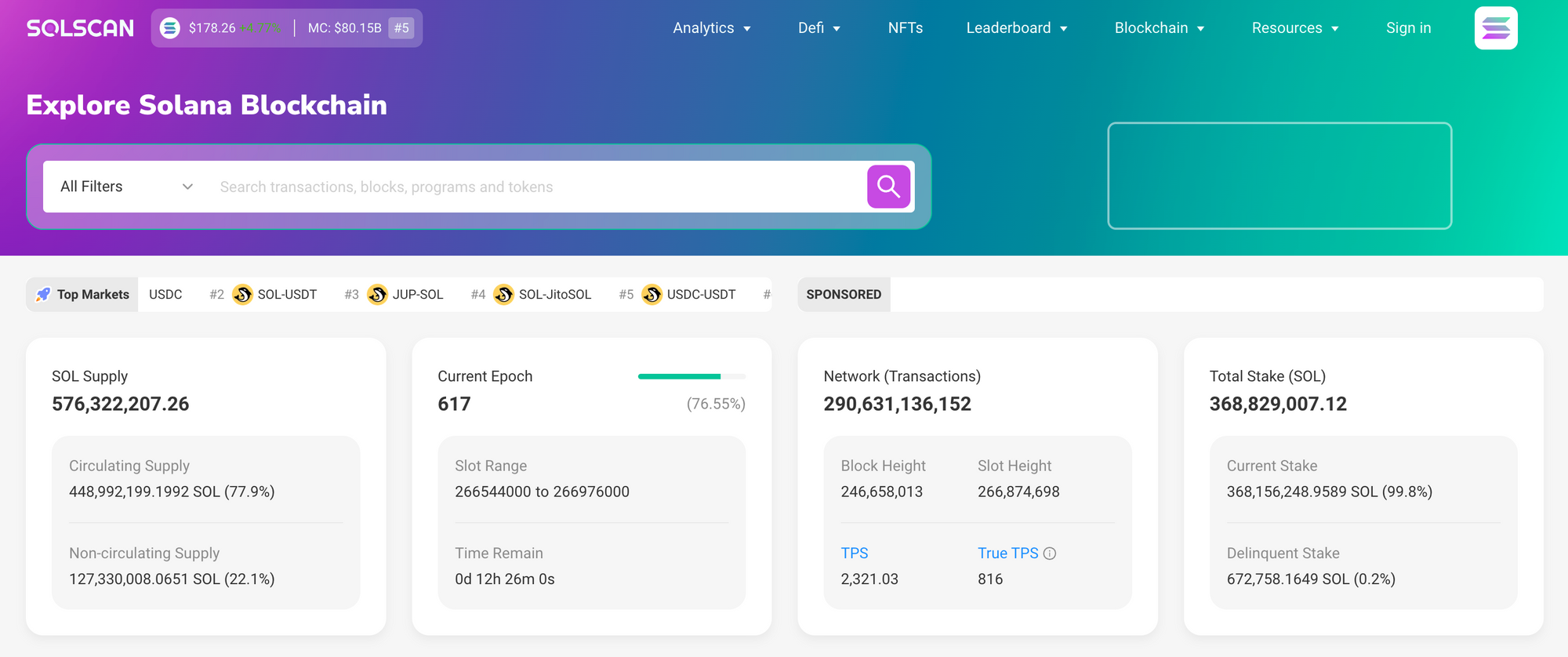
How to read a SOL transaction — step by step
Start with the signature. That single long string is your primary key. Next, check the status. Success or failure? If failed, expand the logs. Those logs often tell you why a transaction reverted. If success, expand the token transfers. See which accounts received lamports or SPL tokens. Then inspect inner instructions to find cross-program calls, CPI values, or wrapped SOL handling. If you want a fast lookup, I usually paste the signature into Solscan’s search bar and follow the linked accounts. For convenience, you can use this Solscan site I reference when I’m double-checking things: https://sites.google.com/cryptowalletextensionus.com/solscan-explorer-official-site/
Here’s a small, practical checklist I keep in my head: did lamports move? Were SPL tokens transferred? Which program was called? Were any accounts created? Did rent-exempt balances or account closures happen? These items explain most of the «why» behind balance changes. Sometimes you need to look at the program ID and then the program’s docs to understand parameter encoding. Honestly, that part bugs me — not every Solana program documents its instruction layout clearly. So there’s some detective work involved.
On the topic of fees: Solana’s fee model is compact but not always intuitive. A single transaction can carry multiple inner instructions, but you’re charged one fee for the whole transaction. However, compute budget changes and additional signatures can push costs up. If you see an unexpectedly high fee, check if a compute budget instruction was present or if multiple signers are attached. Also watch for CPI-heavy operations — they’re cheap on a per-op basis, but when chained they add up.
Pro tip: use the logs and the «raw data» views together. Logs read like a narrative; raw data is the ledger. The logs are often more helpful for human reasoning, since programs emit custom messages. But raw data is the authority. Don’t trust a program’s log alone if you’re auditing financial flows. Sometimes the logs omit edge-case transfers or show messages in a misleading order because of concurrent execution. On one occasion I swore a transaction failed. Actually, wait—let me rephrase that… I thought it failed because logs were misleading, though the state changes proved otherwise. So cross-verify.
Transactions that interact with Serum, Raydium, or other DeFi primitives will almost always show multiple token movements and temporary account creations. Watch for intermediary accounts that hold wrapped SOL or temporary pools. Those accounts often get closed at the end of the transaction and send lamports back to the originator; missing that step can make balances look odd at first glance. Also, there’s the human factor: wallets sometimes bundle multiple user actions into a single transaction to save fees. That means one signature could represent several conceptual steps.
Wow! Another thing—watch for «duplicate» entries in token transfer lists. Sometimes the same token shows twice: one as a transfer, another as part of a program instruction that later refunds or completes an action. Don’t panic. Trace the flow across inner instructions. Track amounts and mint addresses. If values don’t tally immediately, follow the account balance changes rather than relying on a single summary field.
When you’re debugging, the «accounts» pane is your friend. It lists all accounts touched by the transaction and often includes pre/post balances. Comparing those gives you a math-based truth. If an account’s pre and post balances differ, something changed. If a token account shows a change, check the mint. If the mint is wrapped SOL, expect lamport movement and possibly a closure event. (oh, and by the way… I keep a little cheat-sheet for common program IDs and their typical behaviors — saves time.)
For developers building on Solana, testnet transactions visible on explorers are invaluable. You can push a transaction, then immediately go to the explorer and see which instructions ran and what the logs emitted. This quick feedback loop was one of the reasons I started trusting Solana for rapid prototyping. It felt like working locally with instant visibility, though sometimes the cluster behavior differs slightly in prod under load.
Here’s a small cautionary tale: I once audited a wallet that experienced a sudden token drain. At first I blamed phishing. Then, piecing together transactions on Solscan, I realized a delegated program had permission to transfer tokens and was being triggered by a benign-looking contract. The takeaway: check all authorities and approvals on token accounts. Approvals can persist, and a program with an approval can move funds without further signer consent.
FAQ
How do I find an inner instruction?
Open the transaction details and expand the «Inner Instructions» section. If the explorer doesn’t show it, check the raw transaction or use an alternate viewer. Inner instructions are emitted when a program calls another program within the same transaction, and they’re essential for understanding composite actions.
Why does a transaction show token transfers but balances don’t match?
Because of temporary accounts, closures, and wrapped SOL handling. Compare pre/post account balances rather than relying only on summed transfer lines. Also check for refunds or fees that might not appear as token transfers but change lamport balances.
Is Solscan safe to use for audits?
Solscan is a solid public interface for reading on-chain state, but it’s a read-only tool. For audits, combine explorer insights with on-chain queries via RPC calls and program source inspection. Explorers are great for speed and human readability, but they should not be your only data source.
Alright — I’m leaving you with this: reading transactions is part detective work, part pattern recognition. You get faster over time. Seriously? Yes. After a dozen audits you’ll spot the telltale signs of cross-program games, fee optimizations, and accidental permissions. There’s a rhythm to it, and if you like puzzles, you’ll enjoy the chase. I’m not 100% sure you’ve mastered it yet, but you’ll be close. Keep poking, and keep a notebook — and if you get stuck, remember: sometimes the simplest explanation is the right one, though actually sometimes it’s the weird one.